The tows fascinate us. Their constant parade gives a sense of the importance of the inland rivers to the US economy. The lower Mississippi sees 12,000 vessels carrying more than 500 million short tons of imports, exports, and domestic freight, plus 700,000 passengers. They run 24/7 and the sound they make defines the heartland of the nation. It is very low frequency similar to an earthquake in that you are not really sure whether you are hearing it or feeling it. Quite distinctive but has the addition of regular beat.
The following information from one of the tow companies outlines the typical positions, responsibilities and schedules for a crew on the Mississippi and Illinois Rivers
Captain – Supervises all crew members who work on the vessel and must possess a current USCG Marine Officer Pilot’s License.
Pilot – Performs the same job as the Captain when the Captain is off-watch and must have the same credentials as the Captain.
Engineer – Maintains vessel systems including areas of electrical, mechanical, diesel, pneumatic, hydraulic, and plumbing.
Cook – Feeds crew members; providing three meals per day.
Tankerman (Gulf Division) – Prepares the tank barges for safe loading and discharging of various chemicals and must possess a valid, current Merchant Mariner’s Document with a Tankermans’ endorsement.
Deckhands – Builds various tows and maintains the vessel. (One of the experienced deckhands is designated as the “Mate”).
Work Schedule
Because the vessels operate 24 hours seven days a week, all the crew members, except the cook, work “watches” of six hours on, six hours off. Watch changes generally occur at 5:30 a.m., 11:30 a.m., 5:30 p.m., and 11:30 p.m. The cook serves meals between 4:45 a.m. and 6:15 a.m., 10:45 a.m. and 12:15 p.m., and 4:45 p.m. and 6:15 p.m., so that crew members can eat their meals either prior to going on-watch or after coming off-watch.
When the various crew members are not on-watch, then they are off-duty and may engage in their personal pursuits. However, they remain on their vessel at all times and live a life that is similar to being in the Navy, living in close quarters with one another.
Crew members generally work “trips” of at least 28 days “on the vessel,” although some crew members could work more than 28 days at a time. Thereafter, each crew member will depart and return to their land-based home for leave periods usually consisting of 14 days. After some well-deserved rest and time with family, crew members return to board the vessel.
Crew members have to adjust to a new lifestyle and become accustomed to being away from home. However for most, the benefits will be well worth the hard work and dedication.
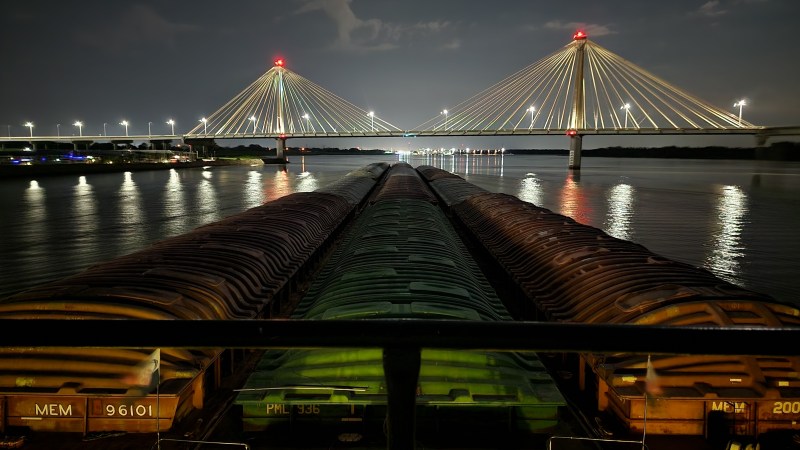
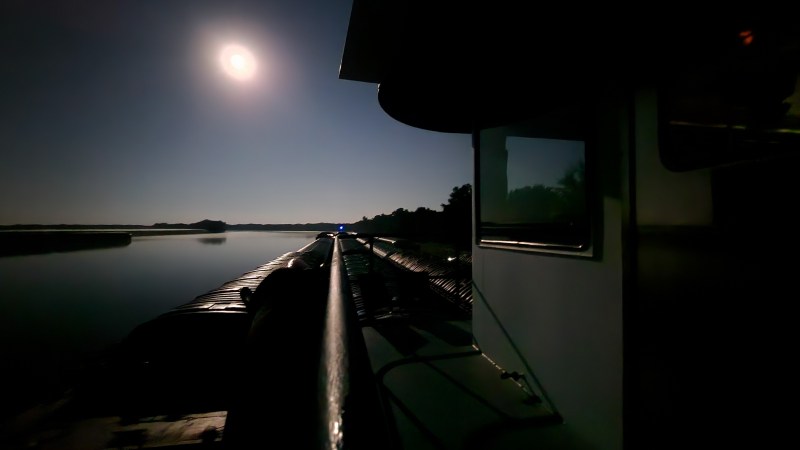
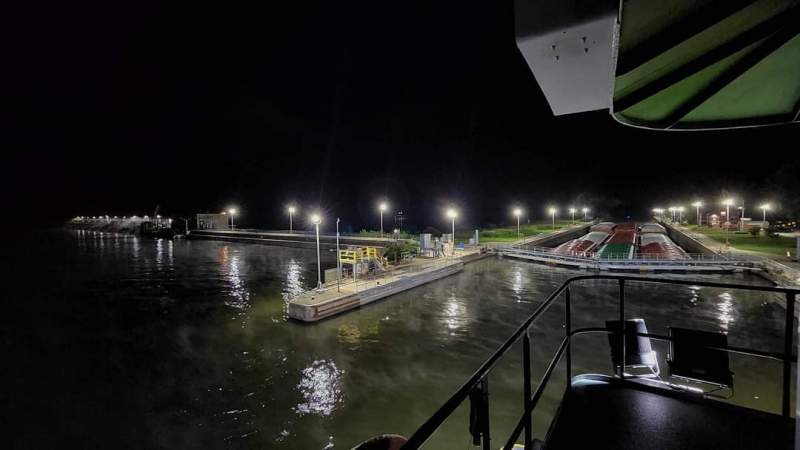
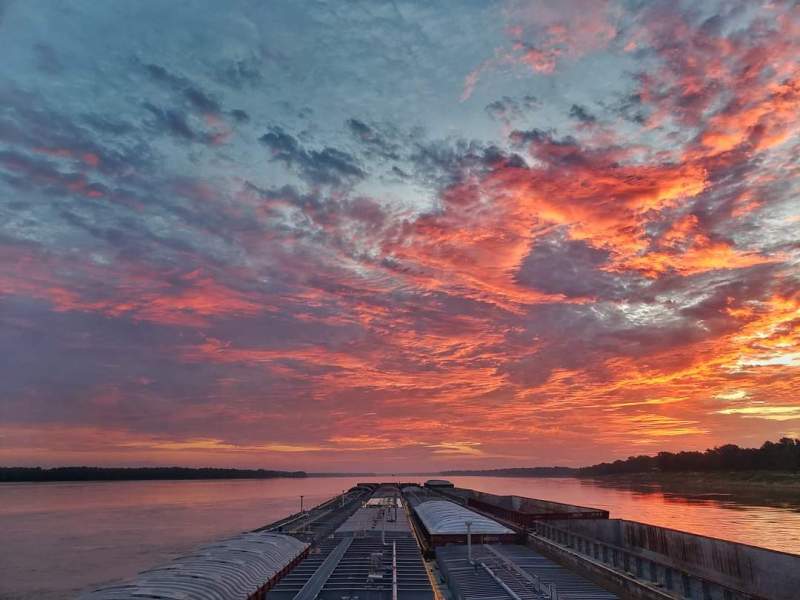
James J Edwards, Pilot of the Capt. Dan Thomas sent us these photographs showing a slice of working life in the water.

 Moon Dance IV
We saw the Capt. Dan Thomas going upstream today as it passed Alton. We will always be on the look out for this boat having “met” the pilot.
LikeLiked by 1 person
Fascinating information as I did not know the river was that busy. American Loopers we met this year have said the Mississippi is the least favourite part of the journey. You made it come alive and breathe for us.
LikeLike
A fascinating, huge, commercial world that almost lives like a subculture for the rest of us. Shipping seems to get a bad name but it is is 20 times more efficient than trucks per ton/mile.
Thanks for the eye opener.
LikeLike