St. Louis is called “The Gateway to the West”. It is located just south of the junction of the Upper Mississippi, Illinois and Missouri rivers so the designation makes sense. It is also the second busiest inland port in the United States. But strangely, you cannot get there by private boat. It is possible to drive passed but there is no where to tie up for a day or two to explore.
We travelled through with two other boats, Anhinga and Susan Lee. Our timing seemed to be perfect. It was a Sunday – hoping for little traffic, and early. We left Alton at 6:20 when the lock master said “Come on down”. We hustled to Melvine Price Lock just a few miles downstream. Locked through in short order and headed to Lock 27 (AKA Chain of Rocks by loopers).
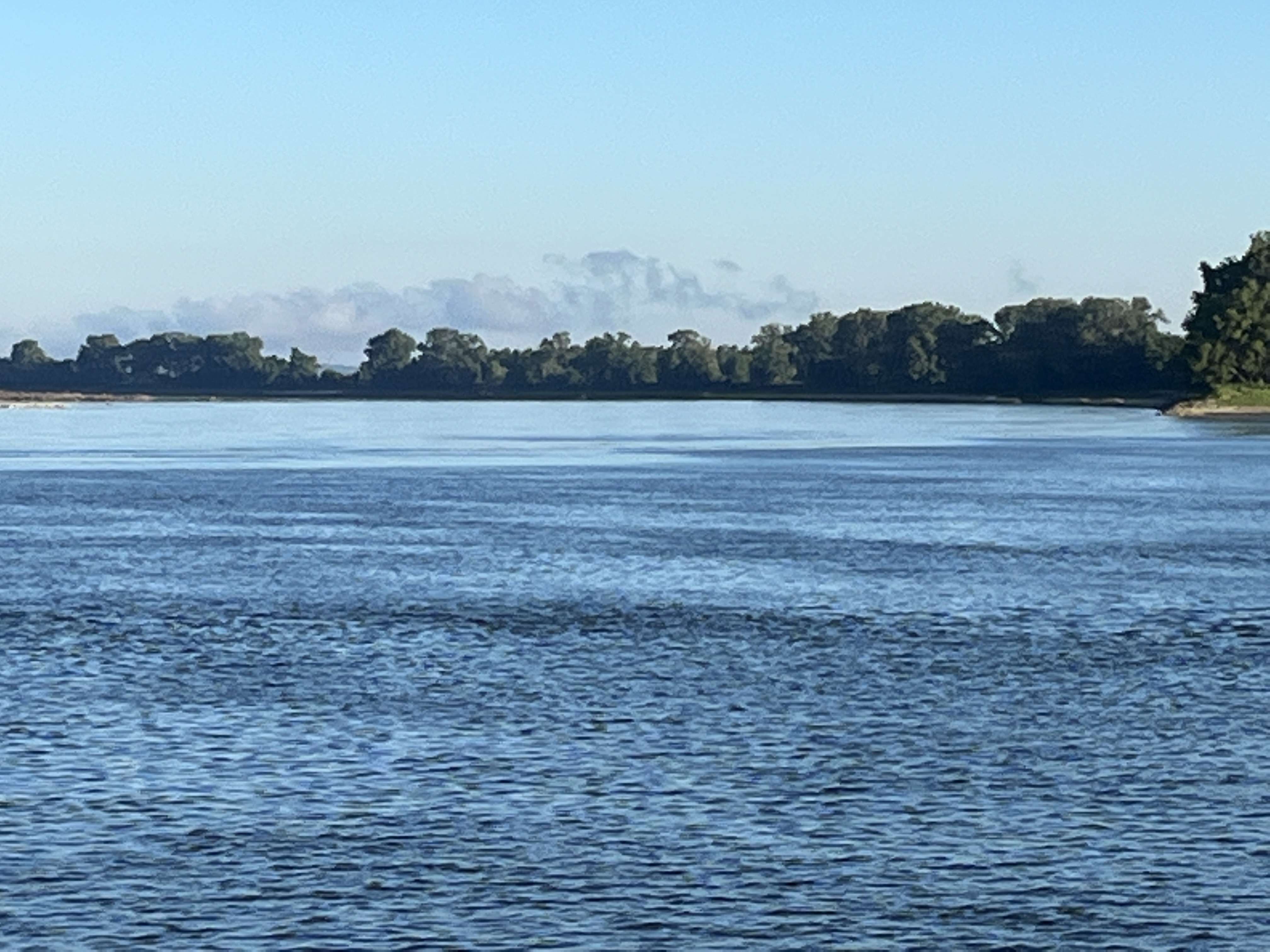
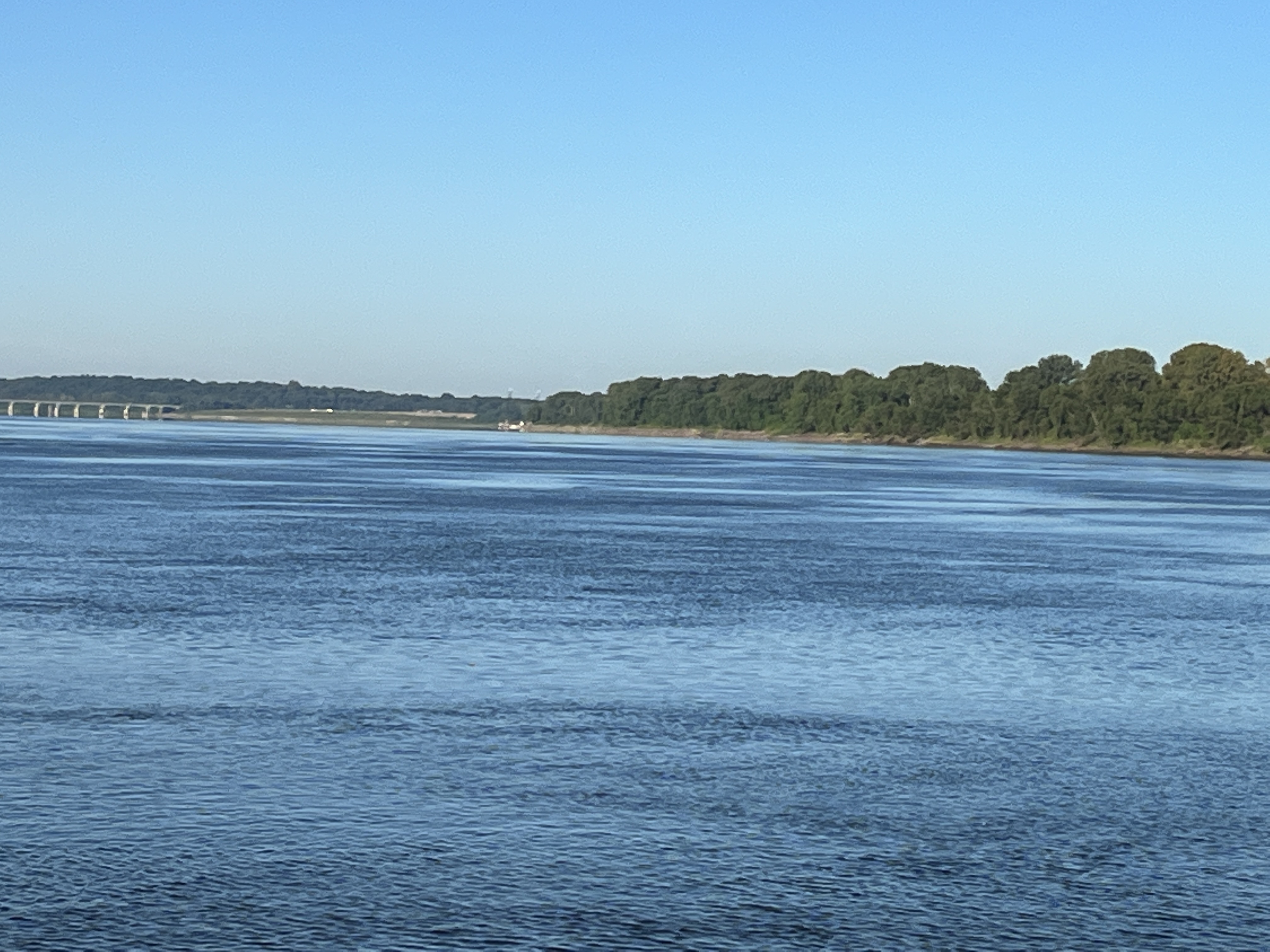
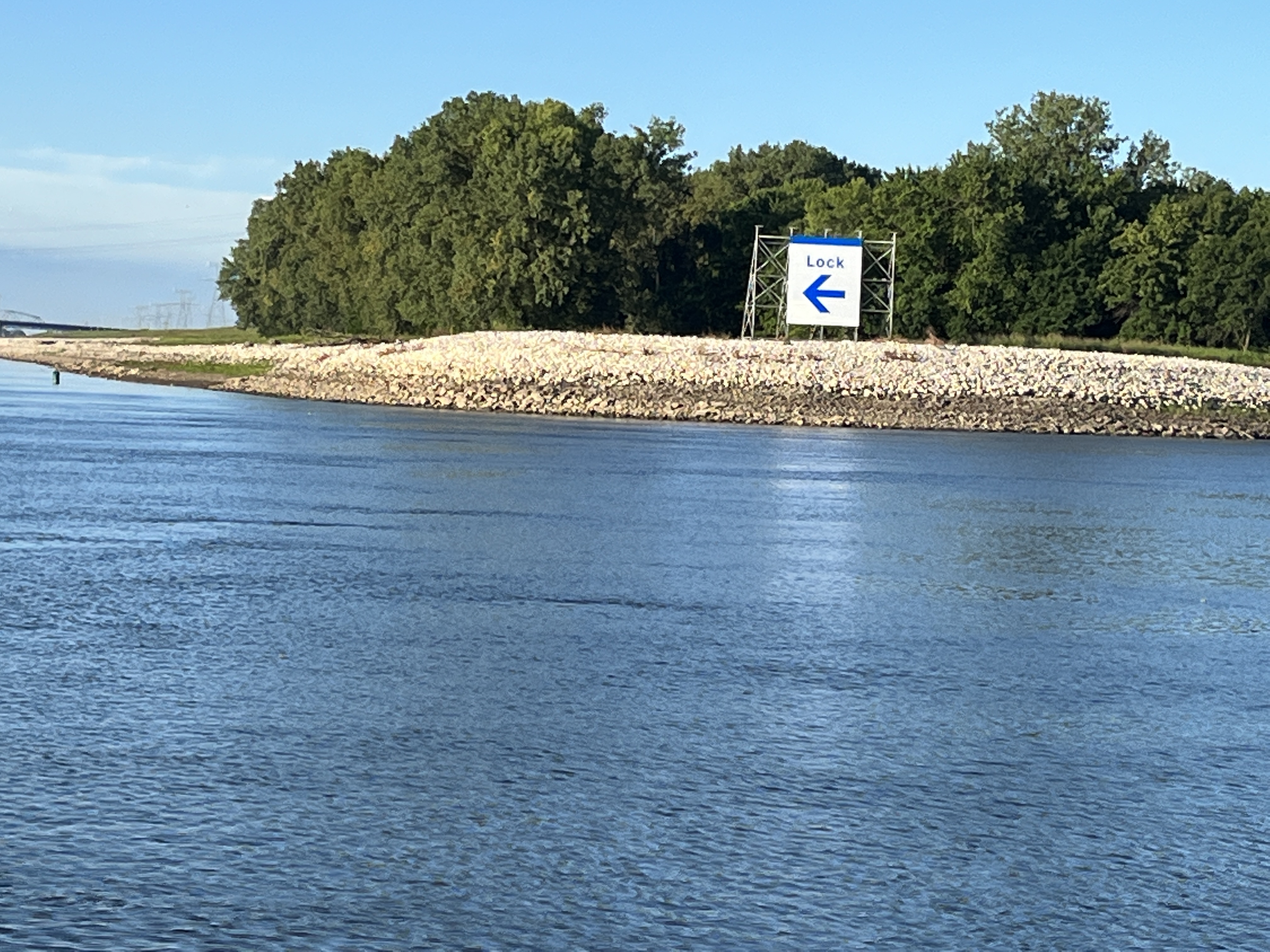
Lock 27 is a double chambered lock. As luck would have it a tow that Anhinga spotted going downriver at 4:30 was just clearing out of the large chamber as we entered the smaller chamber. This meant two things: we weren’t held up waiting for the tow to lock through, and as the heavy tow was down bound it had priority over all up bound traffic. Once we passed this tow, the way ahead was clear for us as up bound tows waited on the side of the river for Virgina to clear their position.
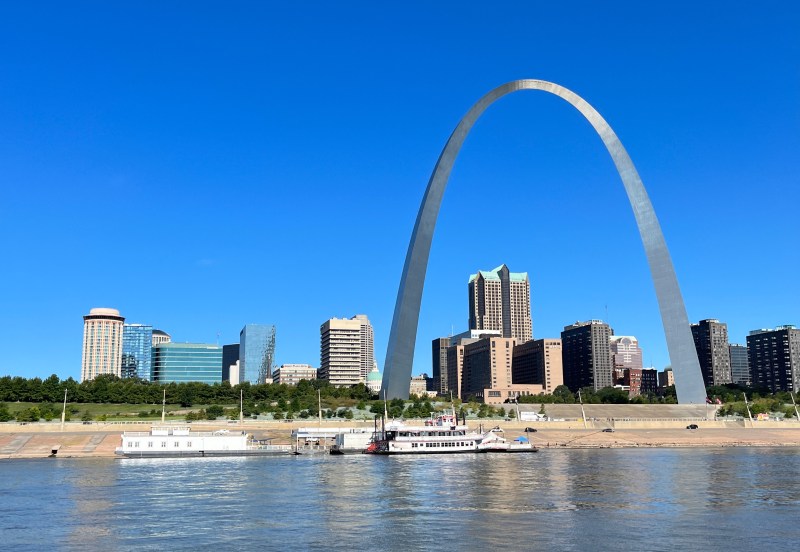
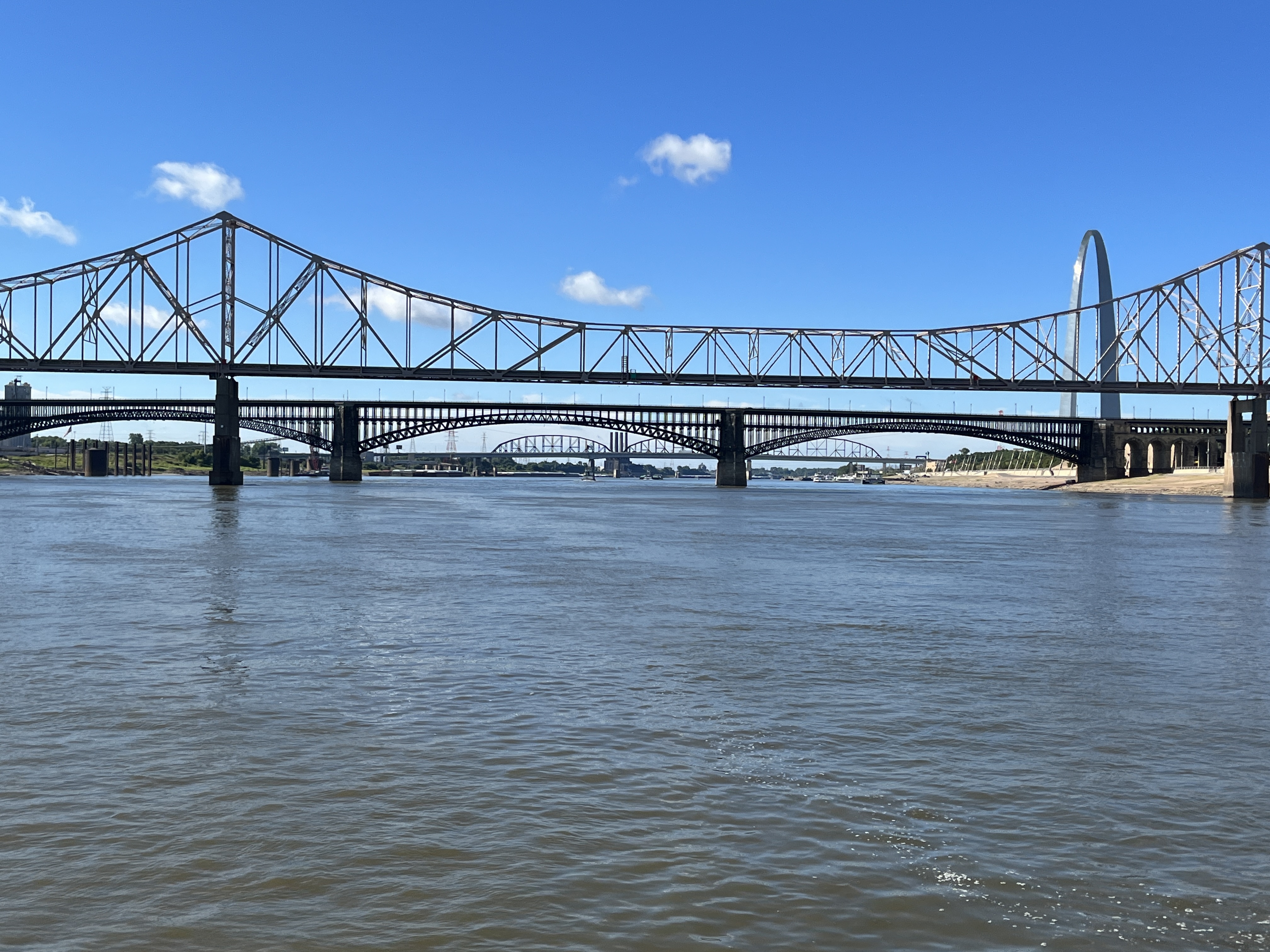
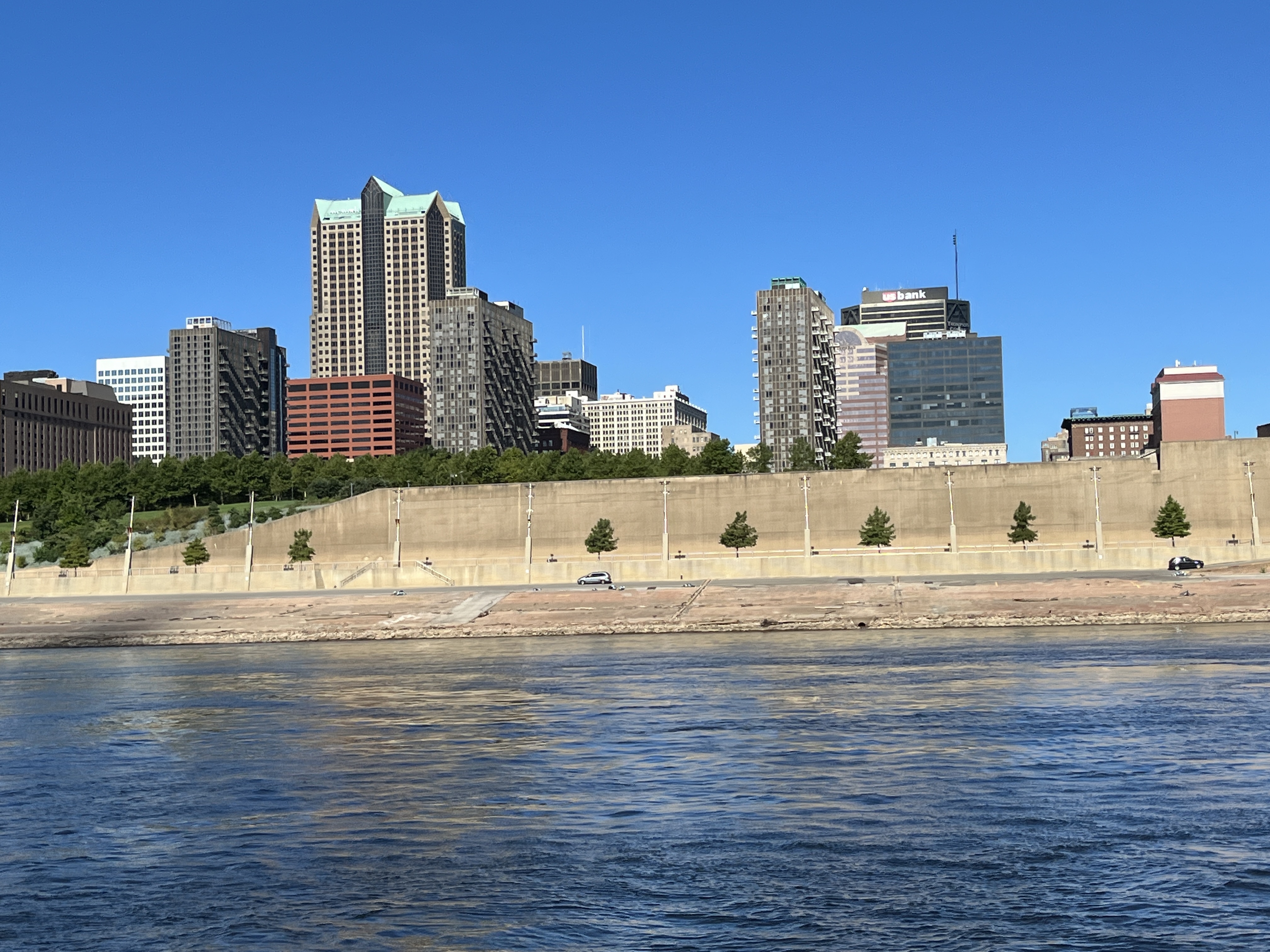
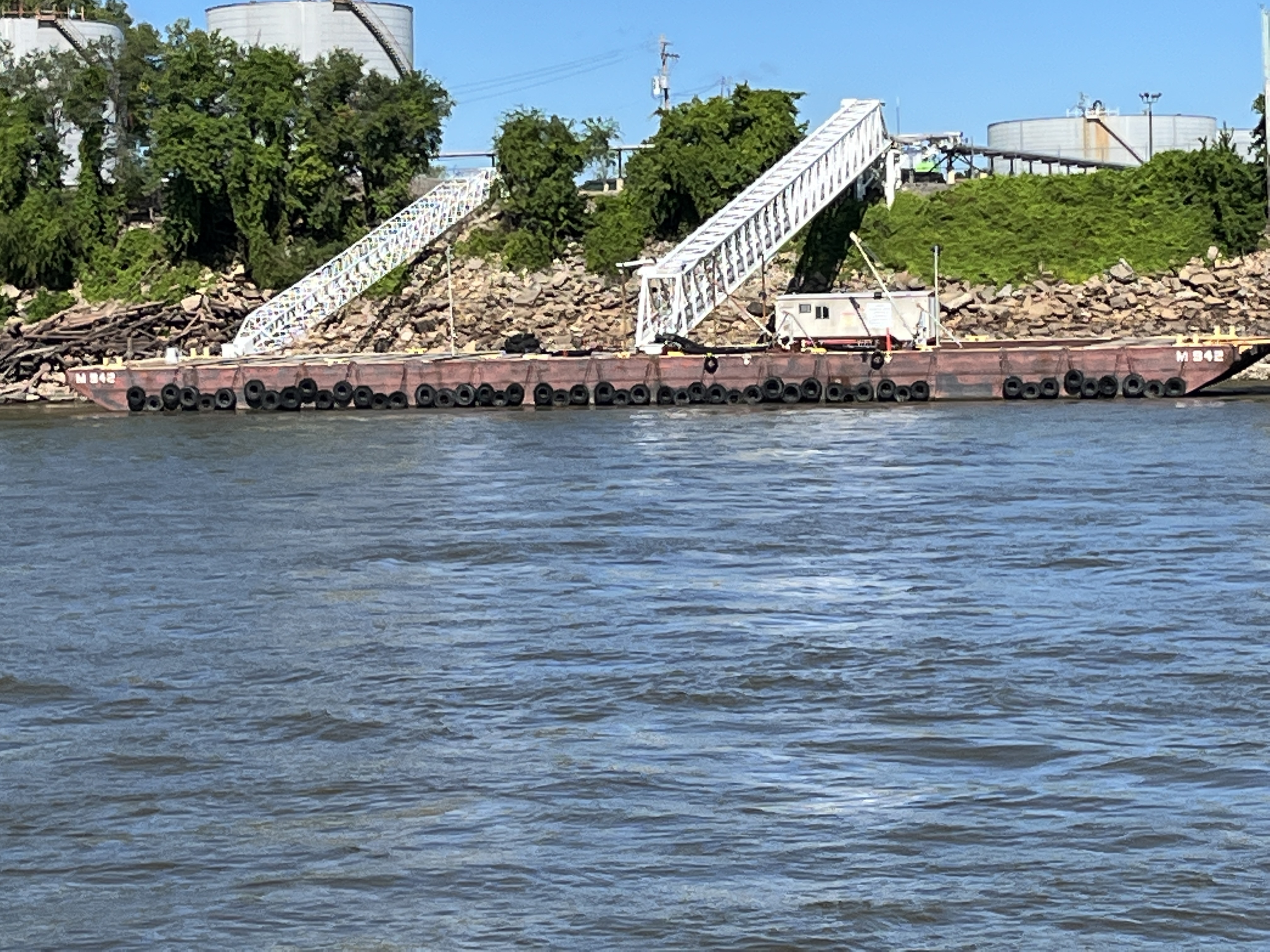
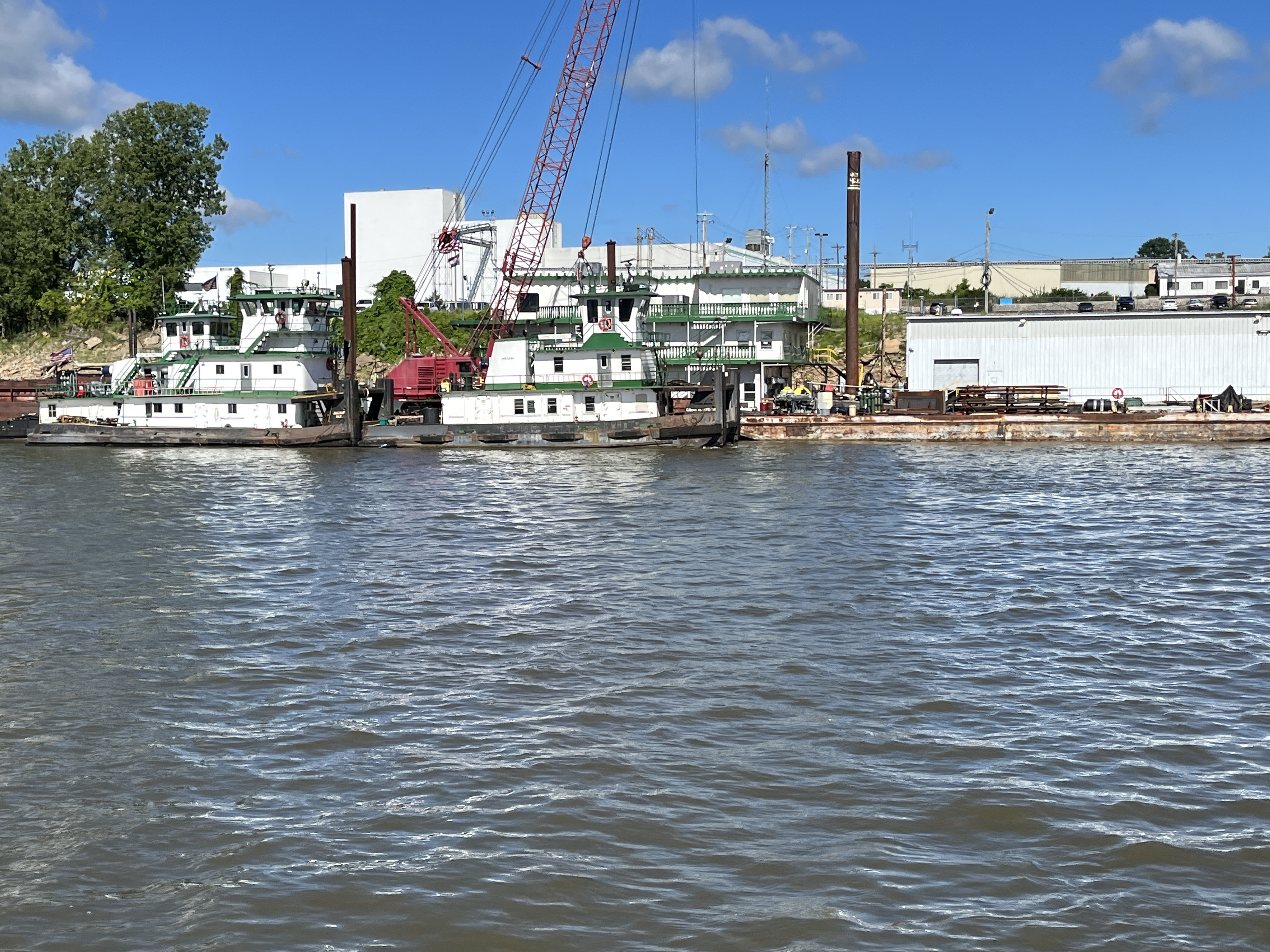
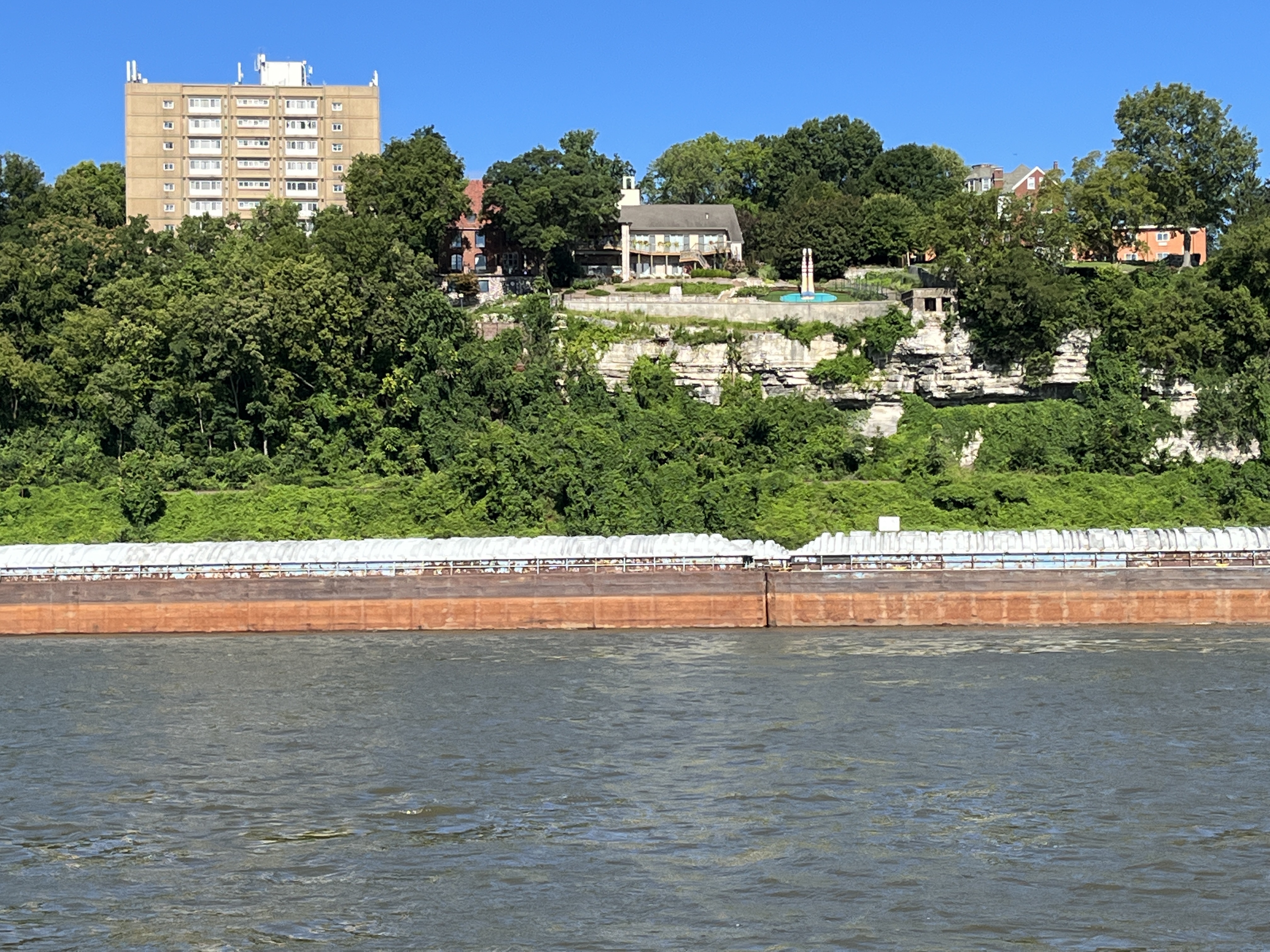
St Louis is across the Upper Mississippi from Cahokia, the largest mound city in the US. Before the arrival of Europeans it’s population was estimated at 10-20,000. Significantly larger than London’s population at the time of 5,000. There are signs of significant trade to the gulf as well as upstream, east and west. Large gathering spaces suggest markets and workshops for skilled trades and artists. Certainly the quality of the few artifacts we have seen is outstanding.
The Spanish likely brought the first wave of diseases to decimated the population. There are reports of Spanish speaking natives as far north as Spanish River on the North Channel. The town was almost abandon when the next wave of settlers arrived.

 Moon Dance IV