Anchoring , the pundits will tell you is a matter of science. Geometry in fact. I won’t get into the arguments around whether geometry is a math or science but will go with the definition that geometry is concerned with the shape of individual objects, spatial relationships among various objects, and the properties of surrounding space.
What does this have to do with anchoring? We have a 26,000 lb boat. We want to use a 50 lb anchor to hold it in one spot. Can we? Apparently we can, and this is where a little math is required.
First of all, pick a potential location. One clear of under water cables, pipelines and submerged bridges. Then determine the water depth. This should be easy with a depth finder and charts. Knowing the depth, add the height of the bow above the water level, and any anticipated changes to the depth of water. For example, tide range, or a change in water level due to hydro generation, or storm surge.
Step two is to calculate the correct amount of anchor rode to let out. A scope of 7:1 ratio is recommended in normal conditions and 10:1 in storm conditions. The scope is the magic that allows the anchor to set in the bottom and balance the force of the boat pulling on it. So the scope is equal to the depth of water, plus the height of the bow multiplied by 7 or 10.
That is the science.
The art involves stopping all forward motion of the boat facing into the wind. The anchor is then lowered gradually just until it reaches the bottom. Marking the rode at regular intervals – ours is marked every 10 feet, helps figure out when the anchor touches down. Generally, our anchor chain goes somewhat slack when the anchor reaches the bottom. Next let the boat drift back with the wind, letting out rode at the same speed as the drift. This helps ensure the anchor is positioned correctly on the bottom and can dig into the sediment. Also, it avoids a pile up of chain in one spot.
When we anchor it there is typically little wind so John has to back down very slowly as I let out the chain. We pause after letting out 3-4 times the depth, giving the anchor time to settle down and dig into the bottom. We then back down slowly to help it set. If it appears to be holding we let out the remainder of chain suggested by the formula.
Finally, we back down hard to test the set. If we have a good hold the boat will jerk when the chain straightens and reaches it maximum length. If not, the anchor bounces along the bottom and the chain vibrates quite clearly.
One must also consider the bottom into which one hopes to set one’s anchor. Obviously if the bottom is rock, one hasn’t a hope of getting the anchor to dig in enough to hold the boat. Strangely enough a bottom covered with weeds has the same result. The anchor just slides along collecting a massive ball of weeds as it glides over the bottom. The best material is sand or a clay that is not too hard.
Our recently experience in Lake Kentucky taught me to look for bays where with a small stream or creek enters. There will often be a “delta” of sand, gravel and clay covering the rocky bottom with enough depth to set the anchor.
Finally set an anchor alarm to sound if the boat drifts out of a set area. Sleep lightly.
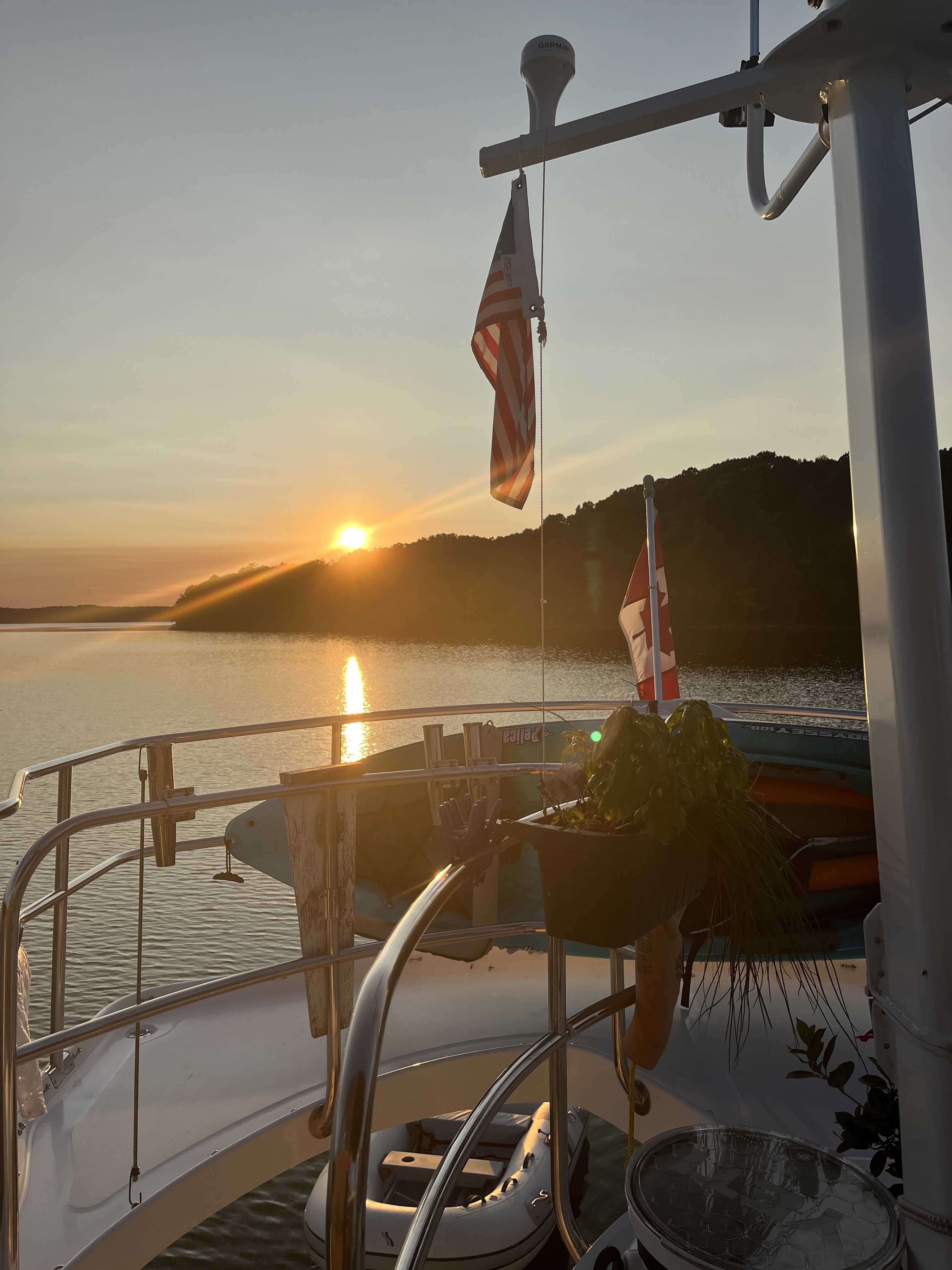
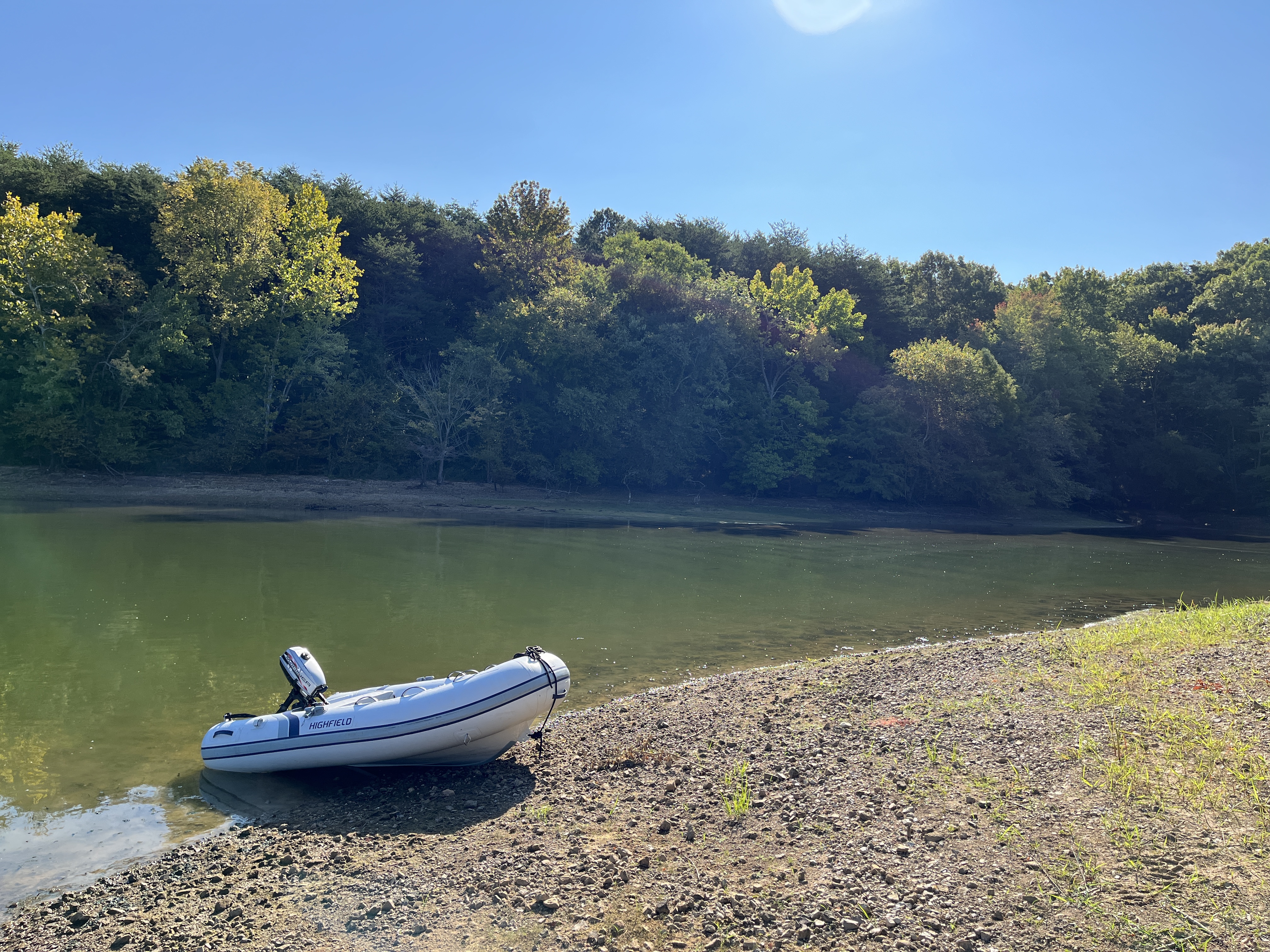
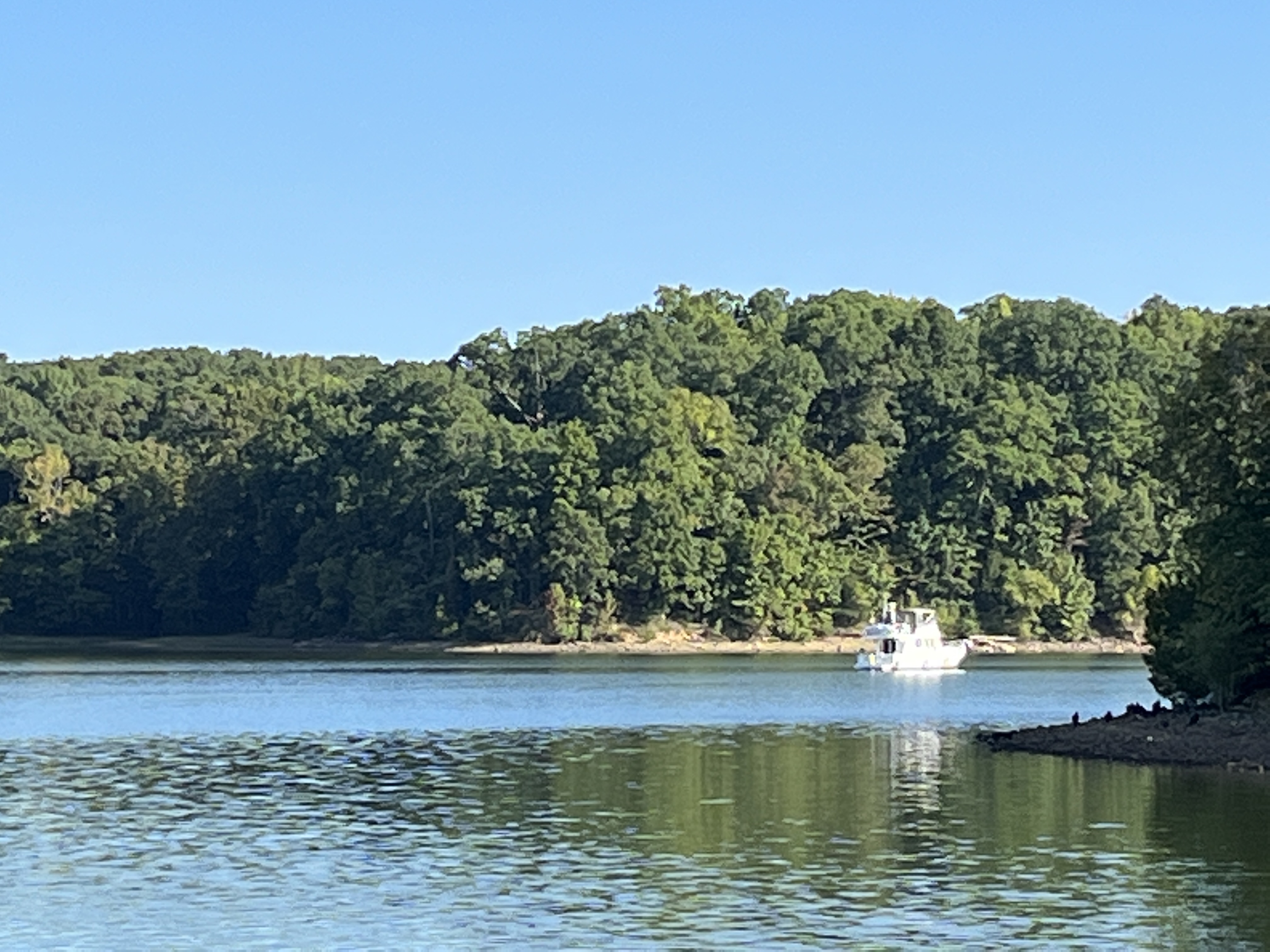
The rewards of anchoring.
Here is a article that provides more detail: https://www.yachtingmonthly.com/sailing-skills/essential-tips-when-using-an-anchor-33584

 Moon Dance IV