45.0230° N, 85.7602° W
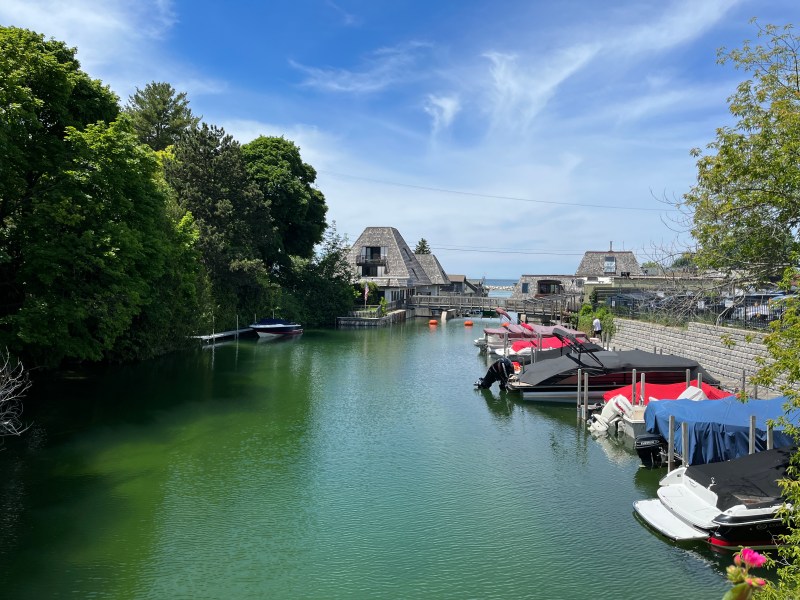
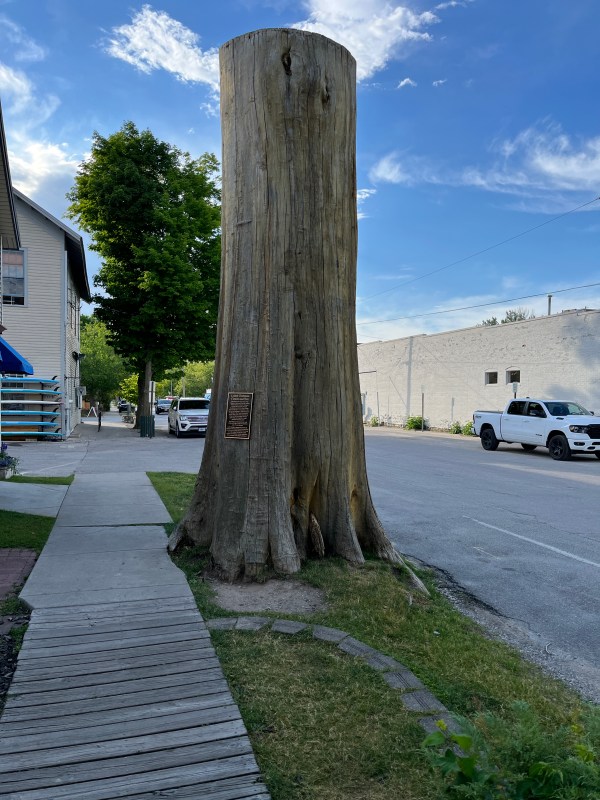
Leland is a beautiful little town on the west side of Michigan’s lower peninsula. The buildings and character clearly show the development and history of the community.
It developed on the site of natural fish ladders used by the native Ottawa and the foundation of their latest village on the Leelanau Peninsula. The river was fed by three lakes on th plateau above. Settlers built a small dam on the river in the 1850s to power a saw mill. The dam raised the level of the lakes by 12 feet; creating a single lake. Docks soon follow that allowed steamers and schooners to land.
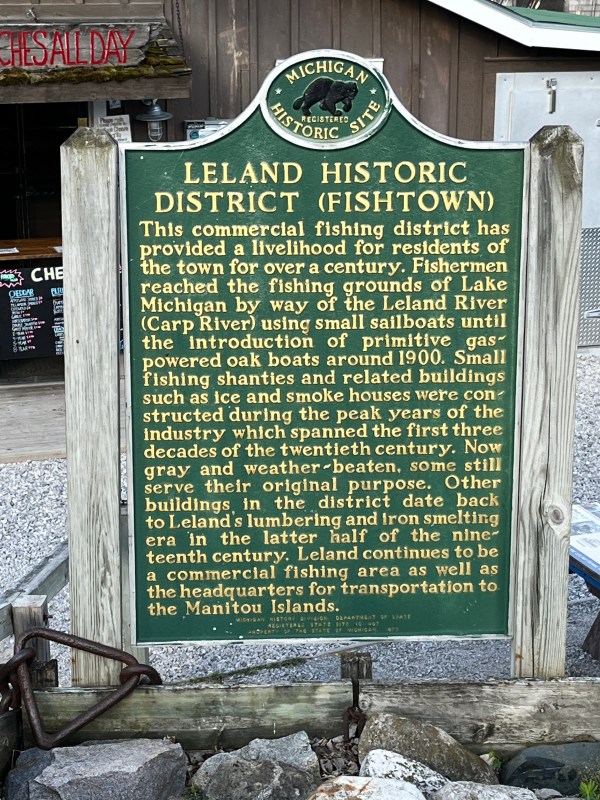
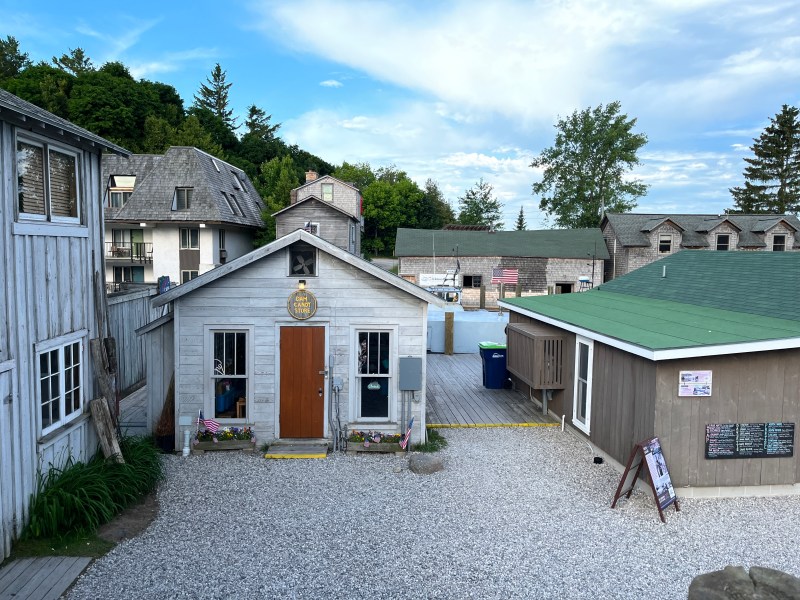
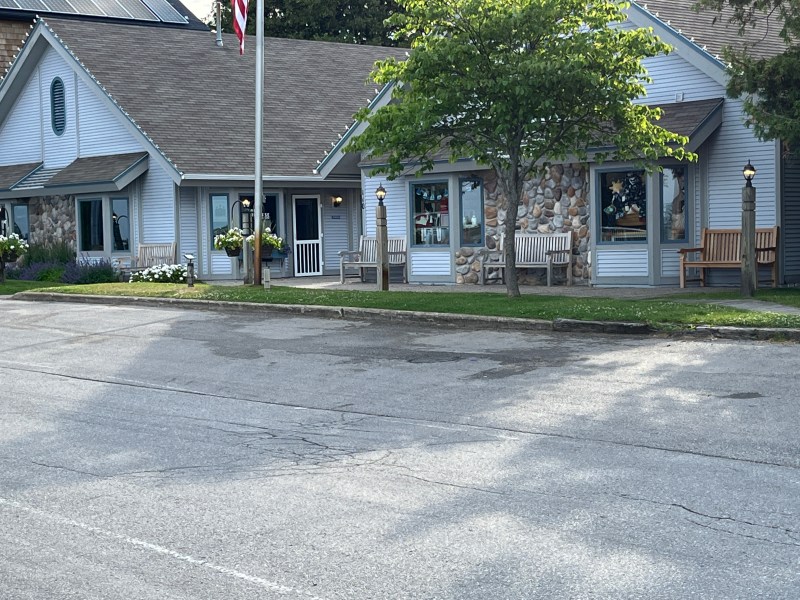
Commercial fishermen began sailing out of the harbour to catch trout and whitefish, building wooden shacks where they processed their catch and serviced their fleet. Today the buildings and two fish tugs, are owned by a non-profit organization, the Fishtown Preservation Society. “Fishtown” is home to a working fishery and a thriving charter fishing business. The riverfront is lined by a boardwalk and the quaint shacks have been converted into tourist shops. Even the new builds replicate the look of the older buildings.



Around 1900, wealthy individuals from Chicago, Detroit, and other Midwestern industrial centres began to visit Leland. They arrived by Lake Michigan passenger steamer or by Lake Leelanau steamer from the railhead near Traverse City. This led to the construction of resort hotels, summer cottages and the growth of Leland as a resort town.
Sleeping Bear Dunes National Lake Shore is close by and one of the dock workers might be willing to rent the family a car so it might be possible to go exploring either the Dunes or do a local winery tour.
 Moon Dance IV